Growth/differentiation factor 11 (GDF11), also known as bone morphogenetic protein 11 (BMP11), is a member of the transforming growth factor-beta (TGF-β) superfamily. It plays a significant role in various biological processes, including development, aging, and tissue regeneration. Mouse GDF11 ELISA kits are specifically designed for the quantitative detection of GDF11 levels in mouse samples, including serum, plasma, and cell culture supernatants. These kits are crucial for research focused on aging, skeletal development, and neurogenesis.
Applications of GDF11 ELISA Kits
1. Research in Aging and Regeneration
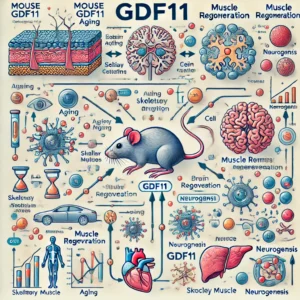
GDF11 has been identified as a key regulator of aging processes. Studies have suggested that GDF11 levels decline with age, and its restoration could reverse age-related functional decline in tissues, such as skeletal muscle and the heart. This makes GDF11 a target of interest in research on anti-aging therapies. Researchers often utilize ELISA kits to accurately measure GDF11 concentrations in animal models to study its effects on age-related diseases.
For more information on GDF11 and its role in aging, visit NIH’s National Institute on Aging.
2. Role in Skeletal Muscle Development
GDF11 is crucial for skeletal muscle development. It regulates the differentiation of muscle progenitor cells and influences muscle growth and repair. Studies on mouse models have demonstrated that changes in GDF11 levels can affect muscle regeneration, making it a vital biomarker for understanding muscle physiology.
Detailed insights on skeletal muscle development can be found at National Institute of Arthritis and Musculoskeletal and Skin Diseases (NIAMS).
3. Neurogenesis and Brain Function
GDF11 has also been linked to neurogenesis and brain function. Research indicates that it can promote the proliferation and differentiation of neural progenitor cells. It is being investigated as a potential therapeutic for neurodegenerative conditions. The ability to measure GDF11 accurately using ELISA kits enables researchers to explore its therapeutic potential in brain health and cognitive functions.
For related studies, see National Institute of Neurological Disorders and Stroke (NINDS).
Features of Mouse GDF11 ELISA Kits
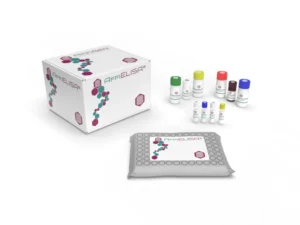
- High Sensitivity and Specificity: These kits are designed to detect low levels of GDF11 in mouse samples, ensuring accurate and reproducible results.
- Wide Range of Applications: Suitable for serum, plasma, and tissue homogenates, making them versatile for various types of studies.
- User-Friendly Protocol: The kits come with easy-to-follow instructions, which are suitable for both novice and experienced researchers.
For more detailed product specifications, refer to the guidelines provided by U.S. National Library of Medicine.
Typical Protocol for Mouse GDF11 ELISA
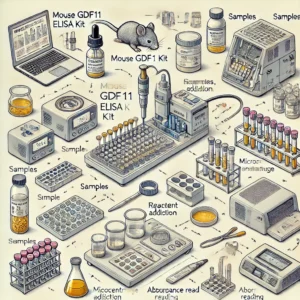
- Sample Preparation: Collect samples (e.g., serum or plasma) and prepare them as per the instructions provided in the kit manual.
- Reagent Preparation: Prepare all necessary reagents, including standards, controls, and diluents.
- Assay Procedure: Add the prepared samples, standards, and controls to the wells. Follow the incubation and washing steps as directed.
- Detection: Use the substrate solution to develop the reaction, and read the absorbance at the specified wavelength.
For detailed protocols and troubleshooting, consult resources available at PubMed Central.
Research Findings and Publications
GDF11 in Cardiovascular Health
GDF11 has been associated with cardiovascular health, and its levels can indicate cardiovascular aging. In mouse models, higher levels of GDF11 were found to reverse some of the structural changes in the heart associated with aging.
To access more studies on this topic, visit Centers for Disease Control and Prevention (CDC) and American Heart Association.
Potential Therapeutic Uses of GDF11
Emerging research is exploring the use of GDF11 in therapeutic contexts, including muscle regeneration and treatment for age-related cognitive decline. Accurate quantification of GDF11 through ELISA can guide such therapeutic developments.
For recent advancements in this area, check out U.S. Food and Drug Administration (FDA) and ClinicalTrials.gov.
Benefits of Using Mouse GDF11 ELISA Kits
- Quantitative Analysis: Allows precise quantification of GDF11 levels, which is essential for comparative studies and monitoring changes over time.
- Reliable and Reproducible: High-quality kits ensure that results are consistent across different experiments, facilitating accurate data interpretation.
- Essential for Preclinical Research: Particularly useful in preclinical studies involving animal models, such as those focusing on muscle degeneration, cardiovascular aging, and neurodegenerative conditions.
For further details on the uses and benefits of ELISA kits, you may refer to resources from U.S. Department of Health & Human Services (HHS) and National Institutes of Health (NIH).
Conclusion
The Mouse GDF11 ELISA kit is an essential tool for researchers investigating the role of GDF11 in various physiological and pathological processes. Its applications span studies in aging, muscle regeneration, neurogenesis, and cardiovascular health. Reliable quantification of GDF11 can provide crucial insights into understanding its therapeutic potential and biological function.
For more information on ordering Mouse GDF11 ELISA kits, visit the National Center for Biotechnology Information (NCBI) or the National Institute of Standards and Technology (NIST).