BspQI GMP-Grade (10 U/μL) is a high-purity restriction enzyme used extensively in molecular biology for DNA modification, cloning, and other genetic engineering applications. It is designed to meet Good Manufacturing Practice (GMP) standards, ensuring consistent quality, safety, and performance. This makes it suitable for applications not only in research but also in clinical and biopharmaceutical manufacturing environments where stringent regulatory compliance is required.
For more information on GMP standards and enzymes, visit FDA and EMA.
What is BspQI?
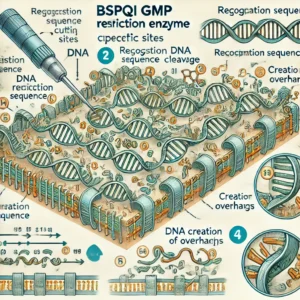
BspQI is a restriction enzyme that recognizes a specific DNA sequence and introduces double-strand breaks at or near this site. It is a type IIS restriction enzyme, meaning it cuts DNA at a defined distance away from its recognition site, which is useful for creating compatible overhangs that can be ligated into other DNA fragments. BspQI is commonly used in various DNA manipulation techniques, including cloning, gene synthesis, and genome editing.
For further reading on restriction enzymes, see resources on NCBI and NIH.
Key Features of BspQI GMP-Grade (10 U/μL)
- High Purity and Activity: Manufactured under stringent conditions to ensure high enzyme activity and purity, with a concentration of 10 Units per microliter, making it ideal for efficient DNA digestion.
- GMP Compliance: Produced according to GMP guidelines, ensuring consistency, traceability, and safety, which is essential for clinical and industrial applications.
- Specificity: Recognizes and cuts DNA sequences with high specificity, minimizing unwanted cleavage and enhancing cloning efficiency.
- Lot-to-Lot Consistency: Ensures reliable results across multiple batches, which is critical for standardized protocols in biopharmaceutical manufacturing.
For technical specifications, refer to data sheets available on FDA and CDC.
Applications of BspQI GMP-Grade
- Molecular Cloning: Used to cut DNA at specific sites, allowing the insertion of target genes into plasmids for cloning and expression studies. For more on cloning techniques, visit PubMed.
- Genome Editing: Facilitates the creation of DNA fragments with specific overhangs, aiding in the precise editing of genomes using technologies like CRISPR.
- Gene Synthesis: Plays a role in assembling synthetic genes, where precise and clean cuts are necessary to piece together multiple DNA sequences.
- Biopharmaceutical Manufacturing: GMP-grade enzymes like BspQI are used to produce clinical-grade products, including gene therapies, recombinant proteins, and vaccines.
For additional insights on these applications, explore resources from NIH and WHO.
Advantages of Using GMP-Grade BspQI
- Regulatory Compliance: GMP production ensures that the enzyme meets rigorous quality standards, making it suitable for use in regulated environments, including clinical trials and commercial manufacturing.
- Consistency and Reliability: Ensures uniform enzyme performance, reducing the risk of variability and increasing the reproducibility of results.
- Scalability: Suitable for both small-scale research and large-scale production, supporting scalability for biopharmaceutical applications.
To understand more about the importance of GMP compliance, refer to guidelines on EMA and FDA.

Mechanism of Action
BspQI recognizes a specific DNA sequence (GCTCTTC) and cleaves the DNA at a defined site away from this recognition sequence. As a type IIS restriction enzyme, it introduces double-strand breaks that result in the creation of overhangs, which can be easily ligated to complementary DNA fragments. This property makes it particularly useful for applications that require precise and efficient DNA assembly.
To learn more about the mechanism of type IIS enzymes, visit NCBI and CDC.
Conclusion
The BspQI GMP-Grade (10 U/μL) enzyme is a versatile and reliable tool for molecular biology applications, particularly those requiring strict adherence to GMP standards. Its high specificity, purity, and consistent performance make it ideal for use in research and biopharmaceutical manufacturing. Laboratories and companies involved in gene therapy, vaccine production, and recombinant protein manufacturing can benefit from the precise DNA manipulation capabilities provided by this enzyme.