The Zero TOPO-TA Cloning Kit operates on the principle of topoisomerase I-mediated ligation. This enzyme, originally derived from Vaccinia virus, cleaves and re-ligates the DNA backbone. Its ability to form a covalent bond with the phosphate group of the DNA allows it to efficiently attach DNA fragments to a vector, making it ideal for high-throughput applications in government-funded genomic research and biomedical studies.
How Does Topoisomerase I Work? Topoisomerase I cleaves a single strand of the DNA helix and forms a covalent bond with the 3′ end. This action facilitates the rapid ligation of DNA fragments, a feature particularly useful in genomic sequencing projects and molecular genetics courses where time and accuracy are critical.
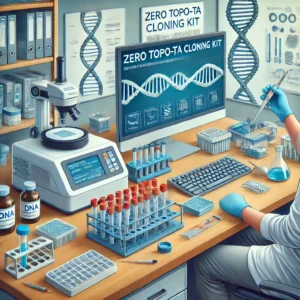
Advantages in Research and Academia
The Zero TOPO-TA Cloning Kit simplifies the cloning process, making it a preferred choice for educational programs and high-level research. Its seamless workflow is a boon for undergraduate molecular biology classes and graduate research labs, where quick, accurate results are essential. By eliminating complex steps such as enzyme digestion and purification, researchers can focus on downstream applications, including:
- Gene Expression Analysis: A major focus in university research, where precise DNA insertion is required for studying gene function and expression profiles.
- Synthetic Biology: This cloning kit supports synthetic biology projects in government laboratories that aim to develop innovative biotechnological solutions.
- Diagnostics Development: The efficiency of the cloning process aids in the development of diagnostic tools for public health purposes in national health organizations.
Real-World Applications of Zero TOPO-TA Cloning Kit
Cancer Research: Cloning genes related to cancer pathways can help in the development of targeted therapies. Researchers from top cancer research centers use the Zero TOPO-TA Cloning Kit to create vectors expressing potential cancer-related genes, facilitating studies that explore gene mutations, protein interactions, and potential inhibitors.
Vaccine Development: In the field of immunology, the cloning kit has proven useful for producing recombinant antigens necessary for vaccine development. For example, during studies conducted at government research institutes, the cloning of viral proteins aids in the design of vaccines against emerging pathogens.
Gene Therapy Research: The simplicity and reliability of the kit make it a key component in gene therapy research projects, especially those sponsored by federal health agencies. Researchers use the kit to clone therapeutic genes, enabling the study of gene replacement strategies in genetic disorders.
Step-by-Step Workflow with Hyperlinked References
- DNA Amplification: The first step is to amplify the target DNA sequence using a high-fidelity polymerase. The importance of this step is emphasized in university lab manuals and biotech training programs that teach PCR best practices.
- Direct Ligation: Once the PCR product is ready, it is mixed with the vector containing topoisomerase I. The topoisomerase enzyme binds to the 3′ end of the DNA, facilitating a one-step ligation process. This approach is highlighted in government research articles on efficient cloning methods.
- Transformation and Growth: The recombinant vector is introduced into competent cells, a process that is commonly optimized in university research for achieving high transformation efficiency.
- Screening and Verification: Colonies are screened using blue/white selection, a method widely discussed in educational tutorials and molecular biology courses.
Enhancing Educational Value in Classrooms
The Zero TOPO-TA Cloning Kit is not just for advanced research; it is also used in teaching settings. Biotechnology programs and hands-on training workshops integrate the kit into their curriculum, allowing students to experience modern cloning techniques firsthand. The ease of use and clear workflow make it suitable for undergraduate labs, giving students a tangible understanding of molecular cloning.

Supporting Public Health Initiatives
Government agencies like the Centers for Disease Control and Prevention (CDC) utilize molecular cloning tools to study infectious diseases. The Zero TOPO-TA Cloning Kit aids in cloning pathogen genes, helping to develop diagnostic assays and understand disease mechanisms. This application has proven essential during outbreaks where rapid genetic analysis is needed, as documented in public health reports.
Conclusion
The Zero TOPO-TA Cloning Kit has established itself as a cornerstone in both educational and advanced research settings. Its reliable, streamlined workflow supports a wide range of applications, from basic molecular biology studies in university labs to groundbreaking research in government health organizations. By simplifying the cloning process, this kit empowers scientists and students alike to conduct high-quality genetic research and innovation.