The POK7 (POZ and Krüppel-like zinc finger protein 7) is a transcription factor involved in regulating gene expression critical for cell differentiation, proliferation, and apoptosis. POK7 is particularly significant in developmental biology and oncology, with aberrant expression linked to various cancers. The POK7 antibody is a crucial tool for studying this protein’s function, enabling researchers to investigate its role in cellular processes and pathological conditions.
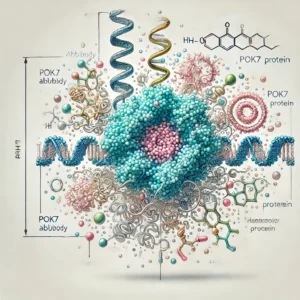
Role of POK7 in Biological Processes
1. Gene Regulation and Transcription
POK7 acts as a transcriptional regulator by binding to DNA sequences and modulating gene expression. Its role in regulating developmental genes is crucial for proper cellular differentiation (National Institutes of Health).
2. Tumor Suppression and Cancer Progression
POK7 has a dual role in cancer biology, acting as a tumor suppressor in some contexts and promoting oncogenesis in others. For example, downregulation of POK7 has been associated with breast cancer progression (National Cancer Institute).
3. Developmental Biology
POK7 is involved in embryonic development by orchestrating key signaling pathways, such as Wnt and Hedgehog, which regulate organogenesis and tissue patterning (PubMed Central).
4. Apoptosis and Cell Cycle Regulation
Research shows that POK7 influences cell survival and proliferation by regulating apoptotic pathways and checkpoints, making it a target of interest in cancer therapies (CDC Cancer Research).
Applications of POK7 Antibody
1. Western Blotting
POK7 antibodies are frequently employed in Western blot experiments to detect protein levels in various cell and tissue types. This application is particularly useful in cancer and developmental biology research (NCBI Proteins Database).
2. Immunohistochemistry (IHC)
The antibody is widely used in IHC studies to identify the localization and expression of POK7 in tissue samples. This technique has been instrumental in understanding POK7’s role in tumorigenesis (NIH Histology Guide).
3. Chromatin Immunoprecipitation (ChIP)
POK7 antibodies facilitate ChIP assays, enabling the identification of DNA binding sites and target genes regulated by POK7 (National Library of Medicine).
4. Flow Cytometry
Flow cytometry using POK7 antibodies allows for the quantification and sorting of POK7-positive cells in heterogeneous cell populations (FDA Research).
Research Findings with POK7 Antibodies
- Breast Cancer POK7 expression was found to be significantly altered in breast cancer cells, and its reactivation reduced tumor progression in preclinical models (Cancer.gov).
- Neural Development POK7 plays a role in neural progenitor differentiation. Studies using POK7 antibodies revealed its involvement in regulating neural tube closure and brain formation (PubMed Central).
- Hematopoiesis POK7 has been shown to regulate hematopoietic stem cell differentiation, with implications in blood disorders and leukemia research (NIH Blood Disorders Research).
Why Use POK7 Antibodies in Research?
- High Specificity and Sensitivity: POK7 antibodies are designed for accurate detection of the protein in various applications, including Western blotting, IHC, and ChIP.
- Broad Applications: These antibodies are compatible with a wide range of assays, making them versatile tools in both basic and applied research (NCBI Research Tools).
- Therapeutic Insights: Investigating POK7 using specific antibodies provides insights into its potential as a biomarker and therapeutic target in oncology and regenerative medicine (NIH Clinical Trials).
Future Directions in POK7 Research
As interest in transcription factors grows, the POK7 antibody will remain a cornerstone in exploring gene regulation, development, and cancer biology. Advances in proteomics and antibody engineering promise to enhance the utility of POK7 antibodies in personalized medicine.
For additional resources, visit: