Poly-L-lysine coated 96-well solid plates (white polystyrene, PS) are a critical tool in cell culture and biochemical assays. These plates are coated with poly-L-lysine, a synthetic polymer that enhances cell attachment and adhesion, especially for non-adherent or weakly adherent cells such as neurons and primary cells. The white PS material provides a reflective surface, making these plates ideal for assays requiring enhanced signal detection, such as luminescence-based assays.
Key Features
- Poly-L-lysine Coating: The poly-L-lysine coating promotes robust cell attachment to the surface, improving the culture of sensitive cells. This is particularly beneficial for neuronal cell cultures and other cell types with poor adhesion properties.
- High Binding Capacity: The poly-L-lysine coating increases the binding capacity of the plate for biomolecules like proteins, nucleic acids, and lipids. This makes these plates suitable for use in cell-based assays, immunoassays, and protein-binding studies, such as ELISA assays.
- White Polystyrene (PS) Material: White PS enhances luminescence signal reflection, improving the sensitivity of luminescence assays such as cell viability and enzyme-linked immunosorbent assays.
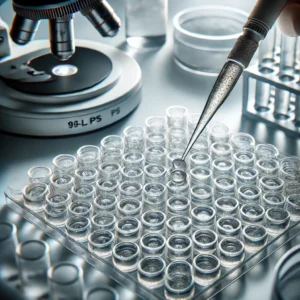
- 96-Well Format: The 96-well format allows for high-throughput screening, making these plates compatible with most standard laboratory equipment, including automated systems like plate readers and pipetting robots.

Applications
- Cell Culture: Poly-L-lysine coated plates are particularly beneficial for culturing primary cells and neurons, making them valuable in neuroscience research. These plates help in studies requiring precise cell positioning.
- Immunoassays: The high protein-binding capacity of poly-L-lysine plates makes them suitable for ELISA and other immunoassays. The strong adhesion ensures that proteins and antibodies remain securely bound to the plate surface, which is critical for antigen-antibody interactions.
- Molecular and Biochemical Assays: These plates are ideal for DNA, RNA, and protein interaction studies. Their surface enhances binding, improving sensitivity and specificity in hybridization assays.
- High-Throughput Screening (HTS): The 96-well format makes these plates suitable for HTS applications. The white PS surface improves the signal-to-noise ratio in luminescence and fluorescence assays, providing reliable and accurate results.
Advantages
- Improved Cell Adhesion: The poly-L-lysine coating ensures that even non-adherent cells like neurons remain attached throughout the duration of experiments. This makes these plates ideal for long-term cell culture experiments.
- Enhanced Signal Detection: The reflective nature of the white PS material amplifies luminescence signals, making these plates an optimal choice for high-sensitivity assays.
- Versatility in Assay Types: These plates are highly adaptable for various applications, from cell-based assays to immunological studies and protein-nucleic acid interaction assays.
Compliance and Standards
For laboratories, using quality materials such as poly-L-lysine coated 96-well plates is essential for meeting standards set by regulatory bodies like the National Institutes of Health (NIH) and the Centers for Disease Control and Prevention (CDC). Researchers should ensure compliance with Good Laboratory Practices (GLP) to guarantee reliable results.
Conclusion
Poly-L-lysine coated 96-well solid plates (white PS) are versatile and essential for many biochemical and cell-based assays. Their enhanced binding properties, combined with the reflective white surface, improve assay sensitivity and provide a robust platform for high-throughput and sensitive assays. Laboratories following stringent quality control measures, as recommended by the CDC and NIH, can ensure reproducible and accurate results when using these plates for research and diagnostic purposes.