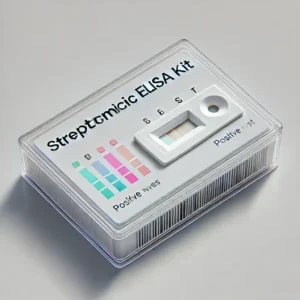
The Streptomycin ELISA Kit is an essential diagnostic tool designed for the quantitative detection of streptomycin residues in various food products such as milk, meat, eggs, honey, and animal feed. Streptomycin, a widely used aminoglycoside antibiotic, is often administered to livestock for the treatment of bacterial infections, but its excessive residues can pose serious health risks. Regulatory agencies such as the United States Department of Agriculture (USDA) (usda.gov) and the Food and Drug Administration (FDA) (fda.gov) have set strict Maximum Residue Limits (MRLs) to ensure food safety.

Importance of Streptomycin Detection in Food Safety
Streptomycin residues in food can lead to antibiotic resistance, allergic reactions, and disruptions in the human gut microbiome. The Centers for Disease Control and Prevention (CDC) (cdc.gov) has emphasized the global threat of antimicrobial resistance (AMR) and the need for stringent monitoring of antibiotic residues in food products.
The National Institutes of Health (NIH) (nih.gov) has conducted extensive research on aminoglycoside toxicity, highlighting their potential nephrotoxic and ototoxic effects when consumed beyond safe limits.
How the Streptomycin ELISA Kit Works
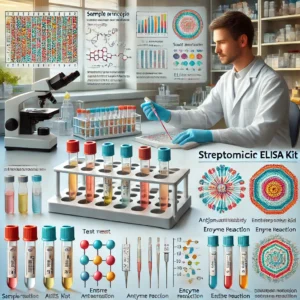
The Enzyme-Linked Immunosorbent Assay (ELISA) is a highly sensitive and specific method used for detecting streptomycin residues. The test follows these basic steps:
- Sample Preparation: Food samples are homogenized and processed according to FDA laboratory guidelines (fda.gov/Animal-Veterinary).
- Antigen-Antibody Reaction: The sample is added to the ELISA plate coated with streptomycin-specific antibodies.
- Enzyme Conjugation & Substrate Addition: A colorimetric reaction occurs, where optical density (OD) values are measured.
- Result Interpretation: The concentration of streptomycin is calculated based on a calibration curve.
For detailed testing protocols, refer to the USDA Agricultural Research Service (ARS) (ars.usda.gov) and National Residue Program (NRP) (fsis.usda.gov).
Regulatory Guidelines and Maximum Residue Limits (MRLs)
The World Health Organization (WHO) (who.int) and the Codex Alimentarius Commission (fao.org/fao-who-codexalimentarius) have established international MRLs for streptomycin in various food products. The European Food Safety Authority (EFSA) (efsa.europa.eu) and the USDA Food Safety and Inspection Service (FSIS) (fsis.usda.gov) actively monitor compliance with these standards.
Advantages of the Streptomycin ELISA Kit
- High Sensitivity & Specificity: Detects trace amounts of streptomycin residues in food.
- Rapid & Cost-Effective: Provides results within 90 minutes, making it suitable for routine screening.
- Meets Regulatory Standards: Approved by major food safety organizations including FDA, USDA, and EFSA.
- Minimal Equipment Required: Can be used in food laboratories, research institutions, and quality control settings.
For more information on food testing and antibiotic residue monitoring, visit:
- National Food Safety Database (foodsafety.gov)
- USDA Agricultural Marketing Service (ams.usda.gov)
- National Antimicrobial Resistance Monitoring System (NARMS) (fda.gov/narms)
Conclusion
The Streptomycin ELISA Kit is a powerful tool for ensuring food safety and public health. By providing accurate and rapid detection of antibiotic residues, it supports regulatory compliance and helps combat antimicrobial resistance. Researchers, food safety authorities, and quality control labs can rely on this test for effective monitoring of streptomycin levels in food products.
For further guidance, explore resources from:
- USDA – https://www.usda.gov
- FDA – https://www.fda.gov
- CDC – https://www.cdc.gov
- NIH – https://www.nih.gov
- WHO – https://www.who.int
- EFSA – https://www.efsa.europa.eu
- FSIS – https://www.fsis.usda.gov
- NARMS – https://www.fda.gov/narms
- FAO Codex – https://www.fao.org/fao-who-codexalimentarius
- AMS – https://www.ams.usda.gov